
Find Out What’s Inside Your Sewer Line Before It Becomes Your Problem. Certified Property Inspectors, Same-Day Reports.
The sewer line running from a San Diego home to the city main is one of the most expensive components a buyer never thinks to inspect, and one of the first things that fails without warning. A collapsed line, root intrusion, or offset joint hidden six feet underground does not show up in a standard home inspection. It shows up as a sewage backup in the first month of ownership, followed by a repair bill that starts at $5,000 and climbs fast depending on depth, access, and the extent of the damage.
Turn Key Property Inspectors provides professional sewer camera inspections throughout San Diego County and Riverside County. A high-definition camera is run through the sewer lateral from cleanout to main, capturing real-time video footage of the line’s interior condition: root intrusion, cracks, offset joints, bellying, buildup, and deterioration that no surface inspection could identify. Full digital report with video documentation delivered the same day.
313 five-star Google reviews. InterNACHI certified. BBB A+ rated. Available 7 days a week.
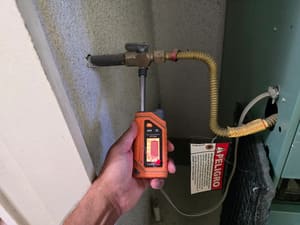
A standard home inspection evaluates what is visible and accessible. Underground sewer laterals are neither. Your inspector can run water, check drain speed, and note any visible signs of backup, but none of that tells you the condition of the pipe itself.
What actually determines whether a sewer line is functional or failing is what is happening inside the pipe. Root intrusion from mature trees is the most common issue in established San Diego neighborhoods, particularly in areas with older clay or cast iron pipe. Roots follow moisture and once inside a joint they expand, crack the pipe, and eventually collapse it. By the time slow drains are noticeable the root mass is substantial.
Other common findings on San Diego sewer camera inspections include:
Root Intrusion
The leading cause of sewer line failure in established San Diego neighborhoods. Mature trees send root systems well beyond their canopy line seeking moisture. Once roots breach a pipe joint they expand, fracture the pipe wall, and eventually collapse the line entirely.
Offset or Separated Joints
Ground movement from Southern California’s expansive clay soils shifts pipe segments out of alignment over time, creating gaps at joints where solids catch, accumulate, and eventually cause blockages.
Pipe Bellying
Sections of pipe that have settled and dipped, creating low points where waste pools rather than flows freely. Bellied pipe is a common finding in San Diego homes where soil movement has disrupted the original pipe grade.
Buildup and Scale
Grease, mineral deposits, and debris accumulation narrow the pipe’s interior diameter over time. Significant buildup reduces flow capacity and accelerates blockage development.
Cracked or Deteriorating Pipe
Clay and cast iron pipe in older San Diego homes degrades over decades, developing cracks and structurally compromised sections that are invisible from the surface and excluded from a standard inspection.
Collapsed Sections
The end stage of pipe deterioration. Collapsed sections require full excavation and replacement and represent the highest-cost sewer repair outcome for San Diego homeowners.
Buying a Home in San Diego?
This is the highest-stakes use case. Sewer line replacement in San Diego runs $4,000 to $15,000 or more depending on depth, length, access, and whether trenchless repair is possible. A sewer camera inspection before closing either confirms the line is in good condition or gives you documented grounds to negotiate a repair credit or require remediation as a closing condition.
Older Home Construction?
Homes built before 1980 in San Diego are frequently on original clay or cast iron sewer laterals that are now 40 to 50 years old. These materials have finite service lives and the failure rate in this vintage of San Diego housing stock is significant. If the home has never had a sewer camera inspection the line is overdue for evaluation.
Mature Trees on the Property?
Oak, eucalyptus, ficus, and other common Southern California species send root systems well beyond the canopy line seeking moisture. If the property has mature trees anywhere near the sewer lateral path, a camera inspection is not optional.
Recurring Slow Drains or Backups?
Slow drains and occasional backups are frequently dismissed as minor plumbing issues. They are more often early symptoms of root intrusion or buildup progressing toward a full blockage or pipe failure.
Recent Purchase Without an Inspection?
Bought a home without a sewer camera inspection? It is not too late. Many homeowners schedule inspections shortly after purchase to establish a baseline condition and understand what maintenance or repair the line may need going forward.
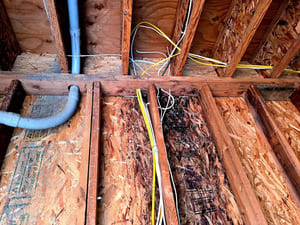
The inspection begins at the cleanout access point, typically located in the yard or near the foundation. If no cleanout is present, access is made through a drain opening. No excavation is required.
A high-definition waterproof camera mounted on a flexible rod is fed through the sewer lateral from the cleanout toward the city main connection. The camera transmits real-time footage to a monitor, capturing the full interior condition of the pipe as it travels the length of the line.
Any findings are documented with video footage and still images showing exact location within the line. Distance markers confirm how far from the cleanout each issue is located, critical information for any contractor who needs to excavate or perform trenchless repair.
Your full report is delivered the same day with video documentation, still images, written findings, and recommended next steps. If you are under contract, your real estate agent receives a copy simultaneously so your team can act before the inspection contingency window closes.
The material your sewer lateral is made from directly affects its condition, failure risk, and repair options.
Clay Pipe
The dominant material in San Diego homes built before the 1970s. Clay pipe is brittle, susceptible to root intrusion at joints, and prone to cracking from ground movement. Homes on clay sewer lines in San Diego’s older neighborhoods are the most common candidates for line replacement.
Cast Iron Pipe
Found primarily in homes built from the 1950s through the 1970s. Cast iron corrodes from the inside over time, developing buildup, pitting, and eventually structural compromise. A camera inspection on cast iron pipe often reveals significant interior deterioration even when the exterior looks intact.
ABS and PVC Pipe
The modern standard for residential sewer laterals. ABS and PVC are resistant to root intrusion and corrosion with significantly longer service lives than clay or cast iron. Homes built after approximately 1980 in San Diego are typically on ABS or PVC, though partial replacements on older homes may mix materials at transition points.
Orangeburg Pipe
A tar and fiber composite material used in some San Diego construction from the 1940s through the 1960s. Orangeburg was designed as a temporary material and has a service life that expired decades ago. Any home on Orangeburg pipe requires full line replacement
Turn Key inspects and documents. We do not perform sewer repairs or refer contractors for fees. Our findings are objective and entirely in your interest.
Sewer camera inspection reports include actual video footage of the line's interior, not just written descriptions. You see exactly what the camera saw, with distance markers showing where every finding is located.
InterNACHI certified and C.A.R. certified. The highest certification level in the inspection industry applied to every inspection Turn Key performs.
Documented by the clients we have worked with across San Diego, Temecula, Murrieta, Menifee, and Riverside County.
Local knowledge of San Diego's housing stock, pipe vintages, soil conditions, and the specific failure patterns common in this market.
Accredited by the Better Business Bureau with an A+ rating. A family owned business serving the communities we inspect in throughout San Diego and Riverside County.
A sewer camera inspection is the most commonly added service to a standard home inspection in San Diego. Scheduling both in the same visit is efficient and gives buyers the most complete picture of the property before closing.
A full evaluation of the home’s structure, systems, and components from roof to foundation. The combination covers the two most common sources of unexpected post-closing repair costs in San Diego real estate.
Sewer gas, moisture from a leaking lateral, and inadequate drainage around the foundation all create conditions favorable to mold growth. If the sewer camera inspection finds active issues, a mold inspection confirms whether interior air quality has been affected.
Homes with pools frequently have independent drain lines and plumbing infrastructure that benefits from evaluation alongside the primary sewer lateral.
San Diego County: San Diego, Chula Vista, El Cajon, Santee, La Mesa, Lemon Grove, Spring Valley, Escondido, San Marcos, Vista, Oceanside, Carlsbad, Encinitas, Del Mar, Poway, Ramona, Fallbrook, Bonsall, Valley Center
Riverside County: Temecula, Murrieta, Menifee, Lake Elsinore, Wildomar, Canyon Lake, Hemet, Perris, Winchester, Sun City, Eastvale, Jurupa Valley
Sewer camera inspections in San Diego typically can start from $350 depending on access, line length, and whether the inspection is bundled with a home inspection. Turn Key provides transparent upfront pricing. Call or book online for a specific quote.
Most sewer camera inspections take 45 minutes to an hour. Combined with a home inspection the sewer camera portion adds minimal time to the overall appointment.
No. A standard home inspection evaluates visible and accessible systems. Underground sewer laterals require a dedicated camera inspection. The two services are complementary and frequently scheduled together but they are not the same evaluation.
Findings are documented with video footage and distance markers. You have options: negotiate a repair credit, require the seller to remediate before closing, or in significant cases exit the contract within the inspection contingency window. The report is the documentation that gives you leverage.
In most cases yes. If no cleanout is present access is made through a drain opening inside the home. Turn Key confirms the access approach when scheduling based on your property details.
On homes built after 1990 with PVC or ABS pipe the risk is lower but not zero. Root intrusion can affect newer lines depending on tree proximity and soil conditions. For homes built before 1980 a sewer camera inspection is strongly recommended regardless of apparent condition.
The sewer line is underground, out of sight, and excluded from every standard home inspection in San Diego. Turn Key puts a camera in the pipe and shows you exactly what is there before you close.
5.0 Stars · 313 Google Reviews · InterNACHI Certified · BBB A+ Rated
Available 7 days a week. Same-day reports with video documentation. No surprises.