
Same-Day Digital Reports From a Certified Master Home Inspector Serving San Diego, Temecula, Murrieta, Menifee, and All of Riverside and San Diego County
The air inside a San Diego home can contain significantly higher concentrations of pollutants than the outdoor air, even on days when the outdoor air quality index looks clean. Mold spores circulating through an HVAC system, volatile organic compounds off-gassing from building materials, radon seeping through a slab, allergens accumulating in ductwork, and particulate matter from wildfire smoke infiltration are all invisible, odorless in many cases, and directly affecting the health of everyone inside the building.
Turn Key Property Inspectors provides certified indoor air quality testing throughout San Diego County and Riverside County. We identify what is in the air your family is breathing, document concentrations against established health standards, and deliver a same-day digital report with clear findings and recommended next steps. 313 five-star Google reviews. InterNACHI certified. BBB A+ rated. Available 7 days a week.
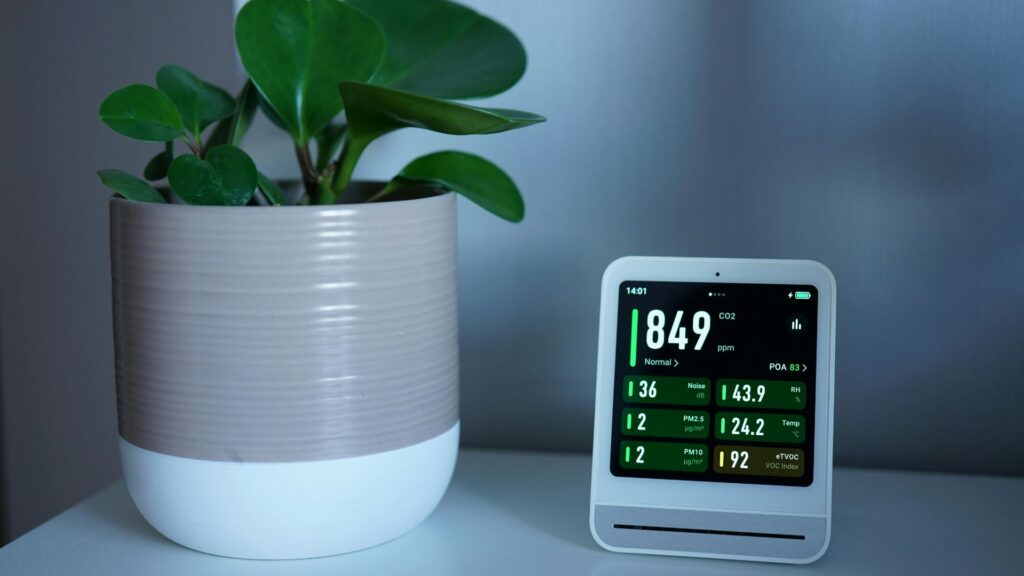
Most people associate poor air quality with industrial areas or heavily trafficked urban zones. San Diego’s air quality challenges are different and less visible.
The marine layer traps pollutants close to the ground in coastal neighborhoods for extended periods each morning. Older housing stock throughout San Diego County, particularly homes built before 1980, frequently contains building materials that off-gas VOCs decades after installation. San Diego’s wildfire seasons introduce particulate matter that infiltrates building envelopes and settles into HVAC systems and ductwork for months after the fires themselves are out. And the region’s humidity patterns, particularly the marine layer and wet season moisture cycles, create ideal conditions for mold spore proliferation inside wall cavities and ductwork.
The result is that San Diego homes that look clean and well-maintained can have indoor air quality issues that only testing identifies.
Mold Spores
Air sampling identifies mold spore type and concentration levels inside the home compared to outdoor baseline readings. Elevated indoor mold spore counts indicate active mold growth somewhere in the building even when no visible mold is present. This is one of the most common findings on San Diego air quality tests given the region’s humidity patterns and prevalence of older construction.
Radon
Radon is a naturally occurring radioactive gas that enters homes through foundation cracks, slab penetrations, and soil gas infiltration. It is colorless, odorless, and the second leading cause of lung cancer in the United States after smoking. San Diego County has documented radon risk zones and Turn Key tests for radon concentration levels against EPA action thresholds as part of a comprehensive air quality evaluation.
Volatile Organic Compounds
VOCs off-gas from paints, adhesives, flooring materials, furniture, cleaning products, and building materials both new and aging. Elevated VOC concentrations cause headaches, dizziness, and respiratory irritation at lower levels and are associated with more serious health outcomes at sustained higher concentrations. New construction and recently renovated San Diego homes frequently test high for VOCs during the off-gassing period.
Allergens and Particulate Matter
Dust mites, pet dander, pollen, and fine particulate matter accumulate in homes with inadequate filtration or ventilation. San Diego’s outdoor allergen load, combined with HVAC systems that circulate rather than filter effectively, creates indoor allergen concentrations that significantly exceed outdoor levels in many homes.
Carbon Monoxide
Colorless and odorless, carbon monoxide from combustion appliances, attached garages, and malfunctioning HVAC equipment is a life safety concern that air quality testing identifies and documents.
Wildfire Smoke Particulate
San Diego County’s wildfire risk is among the highest in California. Fine particulate matter from wildfire smoke infiltrates building envelopes and settles into HVAC systems and ductwork long after visible smoke clears. Homes in San Diego, Temecula, Murrieta, and the broader Riverside County market in wildland-urban interface zones warrant specific evaluation for wildfire particulate accumulation.
Family Members With Unexplained Health Symptoms
Persistent headaches, chronic respiratory issues, unexplained allergy symptoms, fatigue, or recurring respiratory infections in a household are frequently tied to indoor air quality rather than outdoor exposure. If symptoms improve when family members leave the home and return when they come back, the building itself is the likely source.
Buying a Home in San Diego
A standard home inspection does not test the air. Mold spores circulating from a hidden growth source, radon seeping through the foundation, or VOCs off-gassing from previous renovation work are findings that only air quality testing identifies. Knowing what is in the air before closing gives buyers documentation to negotiate remediation or exit a contract within the inspection contingency window.
Recently Renovated or New Construction Homes
Renovation work releases VOCs, dust, and construction particulate that linger long after the work is visually complete. New construction in San Diego frequently tests high for VOC concentrations during the first months of occupancy as building materials complete their off-gassing cycle.
Homes After Wildfire Season
San Diego County’s wildfire seasons leave fine particulate residue in HVAC systems and ductwork that standard cleaning does not fully address. Air quality testing after a significant wildfire season establishes whether particulate levels inside the home have returned to acceptable ranges.
Homes With Visible or Suspected Mold
When mold is suspected but not visually confirmed, air sampling provides the documentation needed to identify spore type, quantify concentration, and determine whether the levels indicate active growth requiring remediation.
Pre-Occupancy Testing
Whether moving into a new home, a recently purchased property, or returning to a home after an extended vacancy, pre-occupancy air quality testing establishes a baseline and confirms the indoor environment is safe before your family moves in.
Turn Key begins with a walkthrough of the property to identify potential air quality sources: HVAC condition, visible mold indicators, renovation history, combustion appliances, and any occupant-reported health concerns. This context shapes the sampling approach and ensures testing is targeted to the specific conditions present.
Calibrated air sampling equipment collects air samples from key locations throughout the home including living areas, bedrooms, HVAC return air locations, and any areas of specific concern. Outdoor baseline samples are collected simultaneously so indoor concentrations can be evaluated against ambient outdoor levels.
Samples are submitted to an accredited independent laboratory for analysis. Results identify contaminant types and quantify concentrations against established health standards including EPA thresholds, OSHA guidelines, and ACGIH reference values.
Your full report is delivered the same day with lab results, concentration levels compared against health standards, specific findings by room and location, and clear recommended next steps. If findings indicate remediation is needed the report gives contractors and specialists the documentation they need to scope the work accurately.
These two services address related but distinct concerns and the difference matters when deciding what you need.
A mold inspection is a physical evaluation of the property: moisture meter readings, thermal imaging, visual assessment of accessible areas for visible mold growth. It tells you where moisture conditions and mold are present physically.
Air quality testing collects and analyzes what is actually in the air: spore counts, VOC concentrations, particulate levels, radon. It quantifies what occupants are breathing regardless of whether a physical source has been visually identified.
The two services are complementary. A mold inspection finds the physical source. Air quality testing documents the health impact. For buyers and homeowners with health concerns or significant suspected contamination, scheduling both in a single visit provides the most complete picture of the property’s indoor environment.
Turn Key tests and documents. We do not perform remediation, sell filtration systems, or refer contractors for fees. Our results reflect what is actually in your air, not what justifies a follow-on service sale.
Lab results and written findings delivered the same day. If you are under contract with a closing deadline, same-day turnaround gives your team time to act on findings before contingency windows close.
InterNACHI certified and C.A.R. certified. The same certification standard applied to every Turn Key inspection applied to every air quality test.
Documented across San Diego, Temecula, Murrieta, Menifee, and Riverside County by the clients we have worked with.
Marine layer humidity, wildfire particulate, regional radon zones, and the specific VOC profiles of San Diego's housing stock vintages. Turn Key brings local context to air quality findings that national testing services cannot provide.
Accredited by the Better Business Bureau with an A+ rating. A family owned business serving the communities we live and work in throughout San Diego and Riverside County.
Air quality testing identifies spore concentrations in the air. A mold inspection identifies the physical source. Scheduling both gives you the complete picture of the mold situation in a single visit.
A full structural and systems evaluation of the property paired with air quality testing gives buyers the most comprehensive pre-closing assessment available. HVAC condition, ventilation adequacy, and moisture intrusion findings from the home inspection all directly inform air quality results.
Radon Testing
If radon is a specific concern based on the property’s location within a documented San Diego County radon zone, a dedicated radon test provides the extended measurement period and detailed documentation that a comprehensive radon evaluation requires.
San Diego County: San Diego, Chula Vista, El Cajon, Santee, La Mesa, Lemon Grove, Spring Valley, Escondido, San Marcos, Vista, Oceanside, Carlsbad, Encinitas, Del Mar, Poway, Ramona, Fallbrook, Bonsall, Valley Center
Riverside County: Temecula, Murrieta, Menifee, Lake Elsinore, Wildomar, Canyon Lake, Hemet, Perris, Winchester, Sun City, Eastvale, Jurupa Valley
Indoor air quality testing in San Diego typically ranges from $200 to $500 depending on the scope of testing, number of contaminants tested, and whether testing is bundled with a home or mold inspection. Turn Key provides transparent upfront pricing. Call or book online for a specific quote.
The on-site portion of an air quality test typically takes one to two hours depending on the size of the property and the number of sampling locations. Lab results are processed and your same-day digital report is delivered within hours of the inspection completing.
Yes. Air sampling identifies mold spore types and concentrations in the air regardless of whether visible mold growth has been identified. Elevated indoor spore counts compared to outdoor baseline levels indicate active mold growth somewhere in the building even when no visible source has been found.
Yes. San Diego County has documented radon risk zones particularly in inland areas including parts of Riverside County. While San Diego's overall radon risk is lower than some other California regions it is not zero and EPA guidelines recommend testing in any home where radon has not previously been measured.
VOC testing identifies volatile organic compounds off-gassing from paints, adhesives, flooring, furniture, cleaning products, and building materials. Common VOCs found in San Diego homes include formaldehyde, benzene, toluene, and xylene. Elevated concentrations are associated with respiratory irritation, headaches, and at sustained high levels more serious health outcomes.
Outdoor air quality monitoring measures ambient conditions in the broader environment. Indoor air quality testing measures what is specifically inside your home, which can be significantly different from outdoor conditions. Indoor pollutant sources including mold, VOCs, combustion byproducts, and radon create indoor concentrations that outdoor monitoring does not capture.
Your report documents specific findings, concentrations compared against health standards, and recommended next steps. Depending on the contaminant, next steps may include mold remediation, VOC source removal, radon mitigation, HVAC cleaning, or improved ventilation. Turn Key provides the independent documentation. You engage specialists to perform remediation work.
u cannot see, smell, or taste most of what affects the air quality inside your home. Turn Key Property Inspectors tests what is actually in the air your family is breathing, documents it against established health standards, and delivers a same-day report with no conflict of interest.
5.0 Stars · 313 Google Reviews · InterNACHI Certified · BBB A+ Rated
Available 7 days a week. Same-day reports. Independent results.